

How to Get Relief from Sciatica
Sciatica pain can be debilitating, but the majority of cases resolve with conservative management. Evidence-based approaches — including targeted exercise, activity modification, and structured rehabilitation — are recommended as first-line treatment by clinical practice guidelines worldwide. Surgical intervention is reserved for cases that do not respond to conservative care or involve progressive neurological deficits.
This guide covers the most effective strategies for sciatica relief, organized from immediate pain management through long-term recovery, so you can understand which approaches are best supported by research and when to seek professional help.
What Is Sciatica?
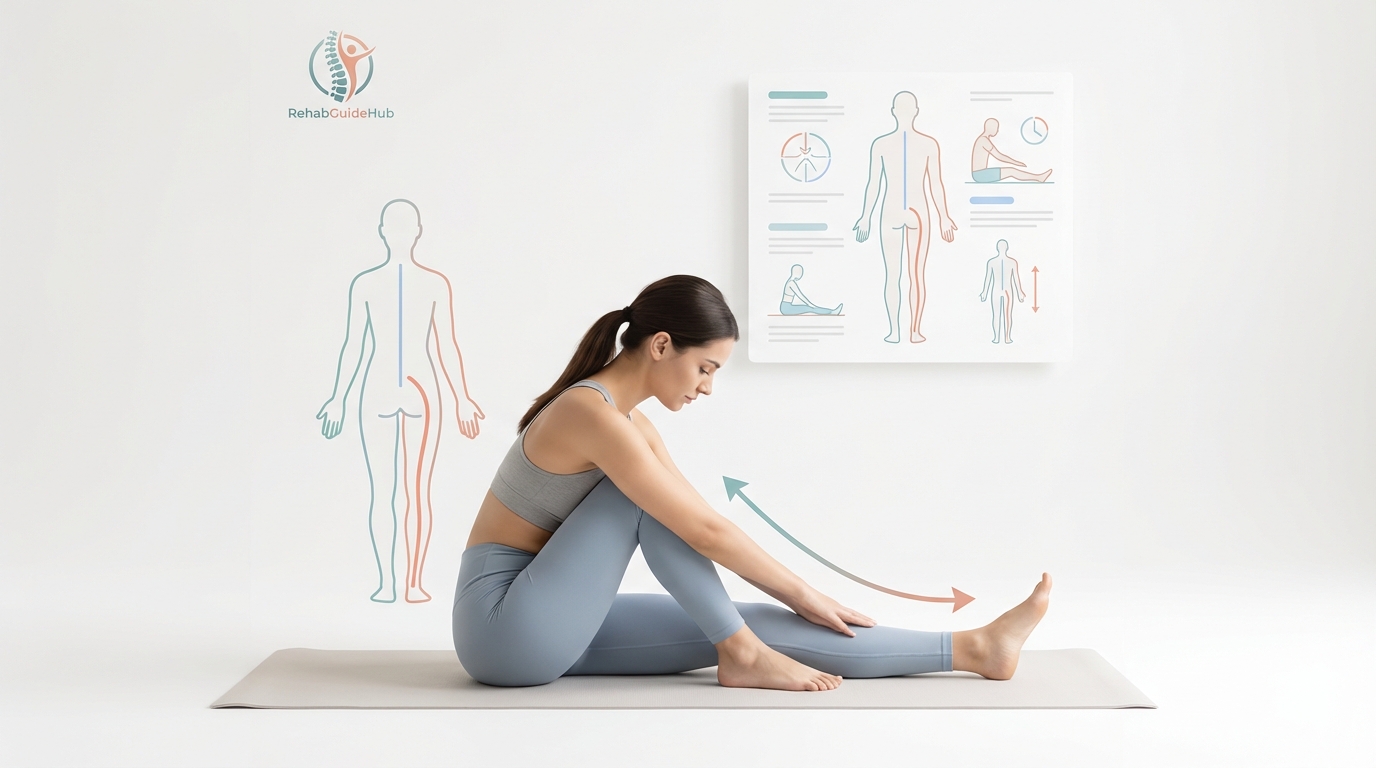
Sciatica describes pain that radiates along the path of the sciatic nerve — the longest nerve in the body, running from the lower back through the buttock and down the back of each leg. Rather than a standalone diagnosis, sciatica is a symptom of an underlying condition affecting the lumbar nerve roots.
The pain typically affects one side of the body and can range from a mild ache to severe, sharp, or burning sensations. Some people also experience numbness, tingling, or muscle weakness in the affected leg or foot. In most cases, sciatica affects the L4–L5 or L5–S1 nerve roots.
For a more detailed overview of sciatica symptoms and diagnosis, visit our sciatica condition page.
What Causes Sciatica?
Understanding the cause of your sciatica is essential for choosing the right relief strategy, because different causes respond to different treatments.
Herniated or Bulging Disc
The most common cause, accounting for approximately 85% of sciatica cases. When the soft inner material of a spinal disc pushes through the outer wall, it can compress or irritate a nearby nerve root. A comprehensive analysis of treatment approaches for lumbar disc herniation (Penchev et al., 2024) found that most disc herniations improve with conservative management, with the herniated material often reabsorbing over time (PMID: 39328604).
Spinal Stenosis
Narrowing of the spinal canal, often due to age-related changes, can compress the nerve roots that form the sciatic nerve. Stenosis-related sciatica tends to worsen with standing and walking and improve with sitting or leaning forward.
Piriformis Syndrome
The piriformis muscle in the buttock can tighten or spasm, compressing the sciatic nerve where it passes underneath or through the muscle. This cause is more common in runners and people who sit for prolonged periods.
Degenerative Disc Disease
As discs lose hydration and height with age, the resulting changes in spinal mechanics can irritate nearby nerve roots. This is a gradual process that may produce intermittent sciatica symptoms.
Other Causes
Less common causes include spondylolisthesis (a vertebra slipping forward over the one below it), tumors compressing the nerve, and infection or inflammation affecting the lumbar spine.
Conservative Treatment Approaches
A systematic review of clinical practice guidelines (Zaina et al., 2023) found strong consensus across international guidelines recommending conservative, non-surgical management as the first-line approach for sciatica (PMID: 36963709). Most guidelines recommend a combination of the following strategies.
Staying Active
Prolonged bed rest is no longer recommended for sciatica. Research consistently shows that maintaining gentle activity leads to better outcomes than immobilization. Walking, swimming, and other low-impact activities help maintain circulation, prevent muscle deconditioning, and reduce nerve sensitivity.
A randomized clinical trial by Fritz et al. (2021) found that early physical therapy referral for patients with acute sciatica led to modest improvements in disability compared to usual care alone, supporting the role of guided activity in early recovery (PMID: 33017565).
Heat and Cold Therapy
- Cold packs: Apply for 15–20 minutes several times per day during the first 48–72 hours of acute pain to reduce inflammation
- Heat therapy: After the initial acute phase, heat can help relax tight muscles and improve blood flow to the affected area
- Alternating: Some people find alternating between heat and cold provides the best relief
Posture and Positioning
Small adjustments to how you sit, stand, and sleep can significantly reduce nerve irritation:
- Sitting: Use a chair with good lumbar support. Avoid sitting for longer than 30–45 minutes without standing up
- Sleeping: Try lying on your back with a pillow under your knees, or on your side with a pillow between your knees
- Standing: Distribute weight evenly on both feet and avoid prolonged static standing
Manual Therapy
Physiotherapy-directed manual therapy, including spinal mobilization and soft tissue techniques, may provide short-term pain relief when combined with exercise. Manual therapy alone is generally less effective than when integrated into a broader rehabilitation program.
Exercise Therapy for Sciatica Relief
Exercise is the cornerstone of sciatica rehabilitation. The type of exercise that works best depends on the underlying cause.
Extension-Based Exercises
For disc-related sciatica, extension exercises such as the prone press-up help centralize pain — moving it from the leg back toward the lower back, which is typically a positive sign. The McKenzie Method, which uses repeated extension movements, has been studied extensively for sciatica treatment.
Neural Mobilization
Nerve gliding exercises gently mobilize the sciatic nerve through surrounding tissues, helping reduce nerve sensitivity and improve mobility. These are particularly useful when nerve tension contributes to symptoms.
Core Stabilization
Strengthening the deep core muscles — including the transverse abdominis, multifidus, and pelvic floor — provides better support for the lumbar spine and reduces load on irritated nerve roots. Exercises like pelvic tilts, bird dogs, and glute bridges are commonly prescribed.
Stretching
Gentle stretches targeting the piriformis, hip flexors, and hamstrings can reduce muscle tension that contributes to nerve compression. However, aggressive stretching — particularly of the hamstrings — can worsen sciatica by increasing tension on the nerve.
For step-by-step instructions on specific exercises, see our detailed guide on the best exercises for sciatica.
What to Avoid During a Sciatica Episode
Certain activities and habits can aggravate sciatica symptoms and slow recovery:
- Heavy lifting with a rounded back — increases disc pressure and nerve compression
- Prolonged sitting — especially on soft surfaces or without lumbar support, which loads the disc
- High-impact exercise — running, jumping, and plyometrics before symptoms have adequately settled
- Aggressive stretching — particularly deep forward bends or hamstring stretches that increase nerve tension
- Complete bed rest — more than a day or two of inactivity can lead to muscle deconditioning and prolonged recovery
- Ignoring worsening symptoms — if pain spreads further down the leg (peripheralization), the current approach may not be appropriate
If any activity consistently makes your symptoms worse or causes pain to move further from the spine, stop and consult a physiotherapist or physician.
Recovery Timeline
The natural history of sciatica is generally favorable. Research on lumbar disc herniation (Delgado-López et al., 2017) documented that the majority of patients experience significant improvement within 6–12 weeks with conservative management, and herniated disc material can partially or fully reabsorb over time (PMID: 28130015).
Weeks 1–2: Acute Phase
- Pain is often most intense during this period
- Focus on gentle movement, pain management (heat/cold, positioning), and avoiding aggravating activities
- Short, frequent walks are encouraged
- Begin gentle exercises if tolerated, such as prone lying or pelvic tilts
Weeks 3–6: Subacute Phase
- Gradual improvement in pain and mobility
- Progress to more active exercises including extension movements, nerve glides, and core work
- Begin returning to normal daily activities as symptoms allow
- Physical therapy is most beneficial during this window
Weeks 6–12: Recovery Phase
- Most people experience substantial improvement by this stage
- Continue progressive exercise and rehabilitation
- Gradually return to higher-demand activities including sport and exercise
- Focus on prevention strategies to reduce recurrence risk
Beyond 12 Weeks
If symptoms persist beyond 12 weeks despite consistent conservative management, further investigation and specialist referral may be warranted. Chronic sciatica may benefit from more intensive rehabilitation, pain management interventions, or surgical evaluation.
Recovery is not always linear — some days will be better than others. Consistency with appropriate exercise and activity modification tends to produce better long-term outcomes than aggressive treatment or prolonged rest.
When to Seek Urgent Medical Attention
Most sciatica can be managed safely with conservative care. However, seek immediate medical evaluation if you experience:
- Loss of bowel or bladder control — inability to urinate or incontinence
- Progressive leg weakness — especially if you notice foot drop or difficulty walking
- Saddle area numbness — numbness in the inner thighs, groin, or buttocks
- Severe, unrelenting pain — that does not respond to any position change or medication
These symptoms may indicate cauda equina syndrome, a rare but serious condition that requires urgent surgical intervention to prevent permanent nerve damage.
FAQ
What is the fastest way to relieve sciatica pain?
For immediate short-term relief, try lying on your back with your knees bent and feet flat on the floor, or with your calves resting on a chair seat. Applying cold packs for 15–20 minutes can help reduce acute inflammation. Gentle walking in short intervals (10–15 minutes) is also recommended. For lasting relief, a structured exercise program targeting the underlying cause is most effective.
Can sciatica go away on its own?
Yes. The majority of sciatica cases resolve within 6–12 weeks, even without formal treatment. However, appropriate exercise and activity modification can speed recovery and reduce the risk of recurrence. Doing nothing and waiting is generally less effective than guided conservative management.
Is it better to rest or move with sciatica?
Movement is generally better than rest. Clinical guidelines recommend staying active and avoiding prolonged bed rest. Gentle walking, swimming, and prescribed exercises maintain muscle strength, promote circulation, and help desensitize the irritated nerve. The key is choosing the right type and intensity of movement — not all activity is beneficial during acute sciatica.
Should I see a physiotherapist or a doctor for sciatica?
Start with your primary care physician or a physiotherapist. A physiotherapist can assess the mechanical cause of your sciatica and design a targeted exercise program. See a doctor if you need medication management, imaging, or referral to a specialist. If you have any red flag symptoms (see "When to Seek Urgent Medical Attention" above), see a doctor immediately.
Does sciatica come back after it heals?
Recurrence is possible, particularly if the underlying risk factors are not addressed. Regular core strengthening, maintaining a healthy weight, proper lifting mechanics, and ergonomic workplace setup can all reduce the risk of future episodes. People who continue a maintenance exercise program after recovery have lower recurrence rates.
What is the best sleeping position for sciatica?
Lying on your back with a pillow under your knees reduces pressure on the lumbar discs and sciatic nerve. If you prefer sleeping on your side, place a pillow between your knees to keep your spine aligned. Avoid sleeping on your stomach, as it increases lumbar extension and may irritate the nerve. A medium-firm mattress generally provides the best support.
Are there other rehab conditions related to sciatica?
Sciatica often coexists with other lower-body conditions. For example, altered gait patterns from sciatica can contribute to foot and ankle problems. If you are also experiencing heel or foot pain, our guide on plantar fasciitis exercises may be helpful.
References
- Fritz JM, Magel JS, McFadden M, et al. Physical Therapy Referral From Primary Care for Acute Back Pain With Sciatica: A Randomized Controlled Trial. Annals of Internal Medicine. 2021;174(1):8-17. PMID: 33017565
- Penchev P, et al. Comprehensive Analysis of Treatment Approaches for Lumbar Disc Herniation. Cureus. 2024;16(8):e67899. PMID: 39328604
- Delgado-López PD, Rodríguez-Salazar A, Martín-Alonso J, et al. Lumbar disc herniation: Natural history, role of physical examination, timing of surgery, treatment options and conflicts of interests. Neurocirugia. 2017;28(3):124-134. PMID: 28130015
- Zaina F, Côté P, Cancelliere C, et al. A Systematic Review of Clinical Practice Guidelines for Persons With Non-specific Low Back Pain With and Without Radiculopathy. Archives of Physical Medicine and Rehabilitation. 2023;104(11):1913-1927. PMID: 36963709
Looking for guided sciatica recovery? Join the RehabGuideHub early access list for structured rehabilitation programs built with physiotherapy expertise.